PR for Film: How Film Public Relations Builds Visibility, Trust and Audience Buzz
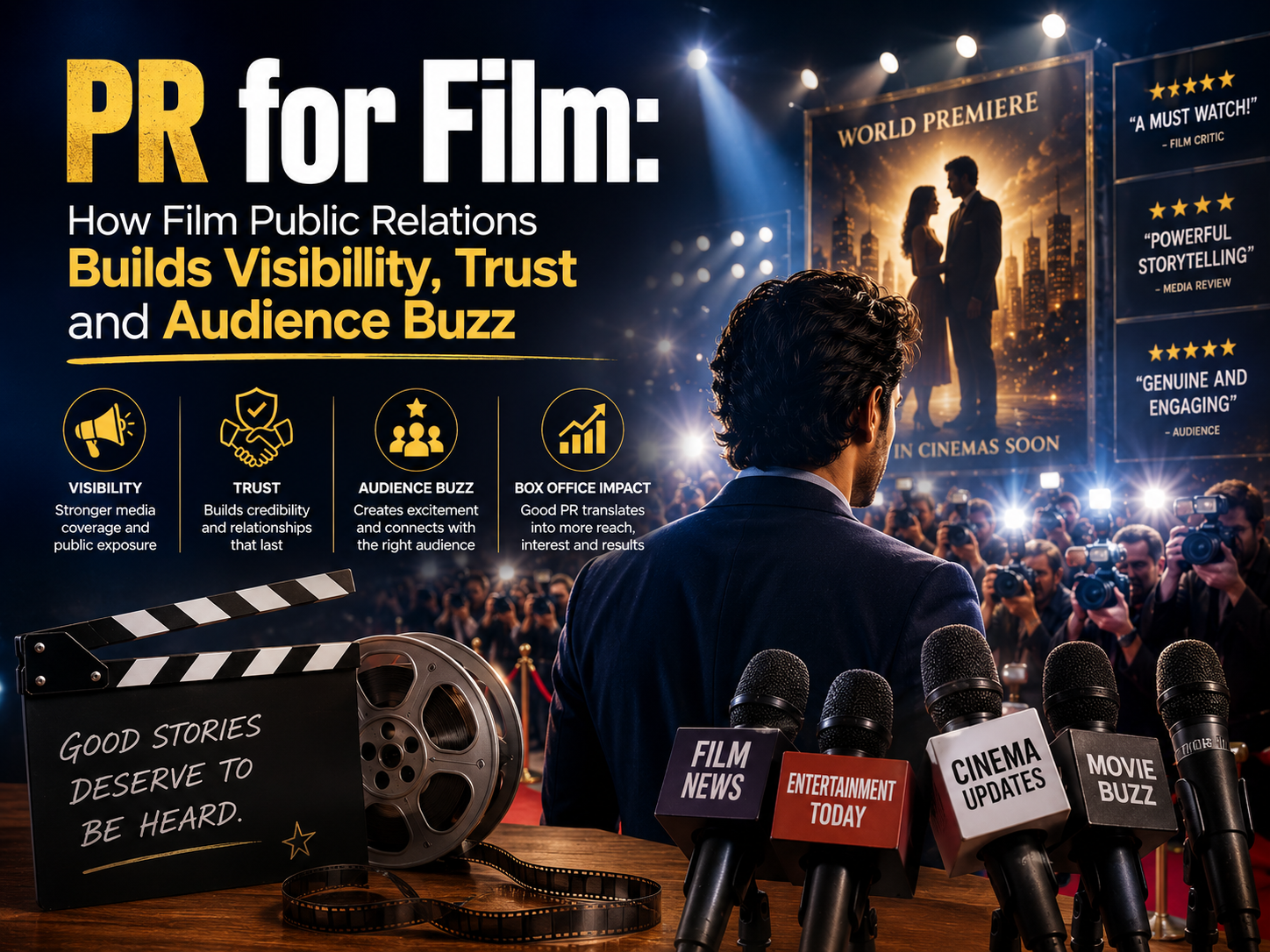
PR for Film: How Film Public Relations Builds Visibility, Trust and Audience Buzz
From film announcements to release-day conversations, strategic film public relations helps filmmakers and production teams tell the right story to the right audience at the right time.
Making a film is a creative journey, but getting people to notice it is a different challenge. Every day, audiences see hundreds of entertainment stories, trailers, interviews, reels, and social media updates. In such a crowded space, simply making a good movie may not be enough to create awareness.
This is where PR for film becomes important.
Film PR is not only about sending press releases or arranging interviews. It is about creating meaningful conversations around a movie, filmmaker, actor, production house, or entertainment project. A planned PR strategy can help a film stay visible from its announcement until its theatrical or OTT release.
According to industry discussions, film PR can begin much before the release, with announcements, exclusive stories, shoot updates, interviews, and promotional activities helping maintain audience interest.
For filmmakers and production teams, professional film PR agencies can bring structure, media relationships, and strategic storytelling to the promotional journey.
What Is Film Public Relations?
Film public relations refers to the planned communication activities used to build awareness and a positive public image around a film and its team.
The focus can include the movie, director, actors, producers, music, story, production journey, and other elements that can generate genuine media interest.
Unlike traditional advertising, PR focuses heavily on storytelling and earned media visibility. It can include:
- Media relations
- Press releases
- Interviews
- Film announcements
- Trailer and poster publicity
- Press conferences
- Celebrity PR
- Digital media outreach
- Festival and premiere publicity
- Crisis communication
- Social media amplification
Modern film promotion is increasingly connected across PR, digital media, events, and audience engagement rather than relying on a single promotional channel.
Why Is PR Important for Films?
A film needs attention before audiences decide to watch it. Public relations in the film industry plays an important role in creating this initial awareness.
A strong PR campaign can help answer basic audience questions:
- What is the film about?
- Who is associated with it?
- Why should people be interested?
- When and where is it releasing?
The answers can then be communicated through relevant media stories, interviews, articles, digital platforms, and promotional activities.
Good PR does not mean creating unnecessary hype. It means presenting genuine and interesting aspects of a film in a way that audiences can understand and connect with.
The importance of authenticity has also been discussed within the Indian film industry, where industry experts have highlighted the need for PR to communicate rather than distort the reality of cinema.
What Do Film PR Agencies Actually Do?
Professional film PR agencies work behind the scenes to coordinate different communication activities.
Their role usually starts with understanding the film, its audience, and its promotional objectives.
1. Film Positioning
The first step is deciding what story should be communicated.
For example, a film may have a powerful social message, an interesting debut actor, a unique location, a first-time director, or a strong real-life inspiration.
The PR team identifies these communication points and develops suitable media angles.
2. Media Relations
Media relations are at the heart of public relations in film.
PR professionals connect with entertainment journalists, newspapers, magazines, television channels, digital publications, and relevant online platforms.
The goal is to present newsworthy information instead of simply sending repetitive promotional messages.
3. Press Releases and Media Stories
A film can generate multiple communication opportunities during its journey.
These may include:
- Film announcement
- First-look launch
- Poster release
- Trailer launch
- Song release
- Behind-the-scenes updates
- Actor interviews
- Director interviews
- Release announcements
- Premiere coverage
Each story should have a clear purpose and provide something useful or interesting to the audience.
4. Interviews and Celebrity Visibility
Actors and filmmakers are an important part of PR for filmmakers.
Interviews can help audiences understand the people behind the movie. A director can discuss the inspiration behind the story, while actors can share their preparation, characters, and experiences.
Such conversations can make the film feel more personal and relatable.
5. Digital Film PR
Today, movie PR is not limited to newspapers and television.
Digital platforms have become an important part of film communication. Social media discussions, online publications, creator collaborations, and short-form content can help a movie reach audiences where they spend their time.
However, digital PR should complement the larger communication strategy rather than become a collection of random posts.
PR for Filmmakers: Building the Person Behind the Film
A filmmaker's reputation can continue beyond one movie.
For emerging directors, producers, and creative professionals, PR for filmmakers can help communicate their professional journey and creative vision.
Stories may focus on:
- Their filmmaking background
- Inspiration behind the project
- Previous work
- Creative approach
- Film festival participation
- Industry experience
- New projects
- Interviews and expert opinions
This creates a stronger professional identity over time.
For new filmmakers especially, consistent and authentic communication can help them become more discoverable within the entertainment ecosystem.
Bollywood PR and Changing Audience Behaviour
Bollywood PR has changed significantly with the growth of social media and instant audience feedback.
Earlier, film publicity was heavily dependent on newspapers, television, radio, outdoor promotion, and traditional media. Today, audiences can react to a trailer within minutes and discussions can spread across multiple platforms.
This means PR teams need to monitor conversations and respond thoughtfully.
At the same time, more publicity does not automatically mean better results. A recent industry example showed how a film can deliberately reduce conventional promotional activity and allow curiosity and word-of-mouth to play a larger role.
The right approach depends on the film, audience, budget, genre, cast, and release strategy.
Film PR Before, During and After Release
A successful public relations in movies strategy can be divided into different stages.
Pre-Release
The objective is to create awareness and curiosity.
Activities may include:
- Film announcement
- First-look publicity
- Exclusive media stories
- Interviews
- Set visits
- Trailer coverage
- Music publicity
- Digital campaigns
Release Period
The focus shifts towards audience interest and visibility.
PR activities may include:
- Reviews and media coverage
- Cast interviews
- Premiere publicity
- Red-carpet coverage
- Regional media outreach
- Television appearances
- Digital conversations
Post-Release
PR does not necessarily stop on release day.
The team can communicate:
- Audience response
- Box-office milestones, where verified
- Awards and festival selections
- Critical recognition
- Cast reactions
- Behind-the-scenes stories
- OTT announcements
- International screenings
This can help extend the film's communication lifecycle.
Choosing the Right Film PR Firm
When selecting film PR firms, filmmakers should look beyond the number of media placements promised.
Consider factors such as:
- Industry understanding: Does the team understand entertainment media and film audiences?
- Storytelling ability: Can they identify genuine stories within your project?
- Media relationships: Do they have relevant relationships with entertainment and regional media?
- Digital understanding: Can they coordinate traditional and digital communication?
- Crisis readiness: Can they handle negative conversations professionally?
- Transparency: Are reporting and deliverables clearly explained?
The right PR partner should understand that every film has a different identity. A strategy suitable for a large Bollywood release may not work for an independent film, regional movie or debut filmmaker.
The Role of Authenticity in Film Public Relations
Effective film public relations should build awareness without misleading audiences.
A campaign may create curiosity, but the communication should remain connected to the actual film and its people.
This is particularly important today because audiences can quickly verify information, share opinions, and challenge exaggerated claims.
PR works more effectively when creativity is combined with credibility.
How Maverick India Can Support Film PR
Maverick India focuses on strategic communication, creative storytelling, and digital marketing. For film and entertainment campaigns, a structured communication approach can help connect the film's story with relevant audiences across digital and media channels.
The objective should be simple: create meaningful visibility, communicate the film's real strengths, and build conversations that feel natural.
Conclusion
Public relations in film industry is much more than publicity. It is about building awareness, shaping communication, and creating a credible connection between a film and its audience.
From PR for film and movie PR to PR for filmmakers and Bollywood PR, every campaign needs a strategy based on the project's identity and audience.
A good film PR campaign does not simply try to make a movie visible everywhere. It finds the right stories, selects the right platforms, and communicates them at the right time.
In a competitive entertainment market, that thoughtful approach can make a meaningful difference.