Healthcare PR Agencies: Building Trust, Visibility, and Credibility for Health Brands
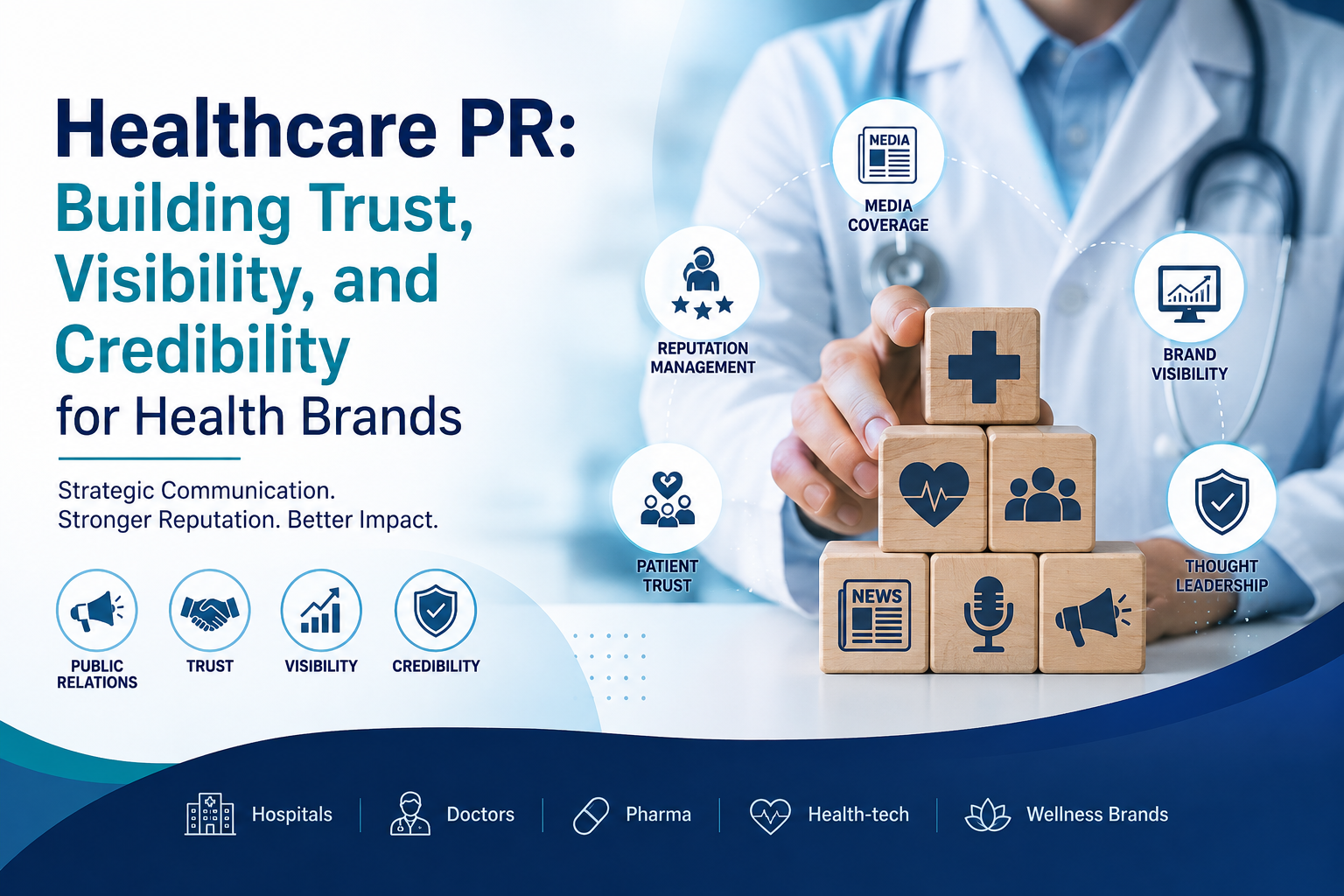
Healthcare PR Agencies: Building Trust, Visibility, and Credibility for Health Brands
How strategic healthcare PR helps hospitals, clinics, doctors, pharma companies, and health-tech brands communicate with the right audience in the digital age.
Healthcare is one of the most trust-sensitive industries. People do not choose a hospital, doctor, diagnostic centre, health-tech platform, or wellness brand simply because they saw an advertisement. They look for credibility, expertise, reviews, media coverage, and reliable information before making a decision.
This is where healthcare PR plays an important role.
Modern public relations is no longer limited to press releases and newspaper coverage. Healthcare brands now need a communication strategy that combines media relations, thought leadership, digital visibility, reputation management, content, and crisis communication.
The growth of digital platforms and AI-powered search is also changing how people discover healthcare information. Patients increasingly research doctors, treatments, and healthcare brands online before taking the next step.
For this reason, working with experienced healthcare PR agencies can help brands build a stronger and more trustworthy public presence.
What Is Healthcare PR?
Healthcare PR means managing the public image, communication, and reputation of a healthcare-related organisation or professional.
It can include communication for:
- Hospitals and clinics
- Doctors and medical specialists
- Pharmaceutical companies
- Diagnostic centres
- Health-tech companies
- Medical device companies
- Wellness and healthcare brands
- NGOs working in healthcare
- Healthcare startups
The objective is not simply to get media coverage. Good PR communicates the right message to the right audience while maintaining accuracy, responsibility, and trust.
Why Healthcare Brands Need PR in 2026
The healthcare industry is becoming increasingly competitive. At the same time, consumers have access to more information than ever before.
A patient may search Google, check social media, read an article, watch a doctor's video, and explore reviews before contacting a healthcare provider.
This makes reputation an important business asset.
Recent healthcare communication trends also show that AI-powered search and digital content are becoming more important in the patient research journey.
A strong PR strategy can help a healthcare brand:
- Build credibility
- Improve brand awareness
- Develop media relationships
- Establish industry authority
- Communicate expertise
- Manage reputation
- Support launches and announcements
- Handle crisis communication
- Improve online visibility
- Strengthen relationships with stakeholders
What Do Healthcare PR Firms Actually Do?
Professional healthcare PR firms create communication strategies based on the brand's objectives, audience, and healthcare segment.
Their work can involve several areas.
1. Media Relations
Media relations remains one of the core functions of PR.
A PR team identifies relevant journalists, editors, publications and media platforms and develops stories that may be useful to their audience.
For example, a hospital could share expert commentary on a healthcare trend, while a health-tech company could announce a new technology or research development.
The focus should be on creating useful stories rather than simply promoting a company.
2. Thought Leadership
Doctors, healthcare founders, and senior executives often have valuable industry knowledge.
PR for health can position these professionals as credible voices in their respective fields through interviews, expert articles, media comments, panel discussions, and industry features.
Thought leadership can help audiences understand complex healthcare topics simply and responsibly.
3. Healthcare Brand Reputation
Reputation can take years to build but can be damaged quickly.
That is why health PR agencies often include reputation monitoring and communication planning in their services.
A consistent communication strategy helps brands respond to public concerns, misinformation, and negative conversations with clarity.
4. Product and Service Launch PR
Launching a healthcare product requires careful communication.
Whether it is a medical device, digital healthcare platform, diagnostic service or new hospital facility, the communication should clearly explain its relevance without making unsupported claims.
A PR team can develop press releases, media pitches, founder stories, interviews and supporting content around the launch.
5. Crisis Communication
Healthcare organisations can face sensitive situations involving service issues, misinformation, regulatory concerns or public complaints.
During such situations, communication must be quick, accurate and responsible.
A crisis communication plan helps the organisation decide what should be communicated, who should communicate it, and how the message should reach stakeholders.
Healthcare PR Is Different From Regular PR
Healthcare communication requires greater attention to accuracy and sensitivity.
A fashion or lifestyle campaign may focus heavily on creativity and engagement. Healthcare communication must also consider patient trust, medical accuracy, and applicable professional and regulatory requirements.
This makes specialist knowledge particularly valuable.
Healthcare PR professionals need to understand:
- Medical terminology
- Healthcare audiences
- Patient concerns
- Industry developments
- Media expectations
- Ethical communication
- Regulatory considerations
- Reputation management
This is why many organisations prefer a PR agency for healthcare requirements rather than treating healthcare communication like a general consumer campaign.
How SEO, AEO and GEO Are Changing Healthcare PR
PR and search visibility are becoming increasingly connected.
A strong media mention can create brand awareness, referral traffic and authority signals. At the same time, well-structured content can help search engines and AI systems understand an organisation's expertise.
SEO
Search Engine Optimisation (SEO) focuses on improving visibility in traditional search results.
Healthcare brands can create informative content around questions that patients, caregivers, and industry professionals commonly search for.
AEO
Answer Engine Optimisation (AEO) focuses on providing direct answers to user questions.
For example:
What does healthcare PR do?
Healthcare PR helps hospitals, doctors, healthcare companies and health-tech brands build credibility, communicate expertise, manage reputation and gain relevant media visibility.
Clear answers like this make content easier for search engines and answer-focused platforms to understand.
GEO
Generative Engine Optimisation (GEO) focuses on making information useful and discoverable across generative AI experiences.
In 2026, healthcare PR strategies can benefit from combining earned media, authoritative content, expert commentary, and consistent brand information.
The goal is not to manipulate AI systems. It is to create genuine, trustworthy information that can be understood and referenced across digital environments.
What Should You Look For in Healthcare PR Companies?
Choosing between different healthcare PR companies requires more than checking a service list.
Businesses should evaluate:
Healthcare Experience
Look for an agency that understands healthcare communication and the expectations of healthcare audiences.
Media Network
Relevant media relationships can improve the chances of reaching the right publications and journalists.
Strategic Thinking
PR should support broader business and brand objectives instead of focusing only on media clippings.
Content Capability
The agency should be able to develop press releases, expert articles, thought-leadership content, media pitches, and digital communication.
Reputation Management
Healthcare brands should have a clear approach to monitoring and managing public perception.
Measurement
Ask how the agency measures PR performance. Relevant metrics may include quality media coverage, reach, share of voice, backlinks, referral traffic, branded searches, sentiment and business outcomes.
Why Choose Maverick India for Healthcare PR?
Maverick India approaches PR as part of a wider brand communication strategy.
For healthcare businesses, the focus can be on developing meaningful stories, strengthening brand credibility, and connecting communication with today's digital discovery journey.
A modern healthcare PR strategy should not operate in isolation. PR, content, SEO, social media and reputation management can work together to create a consistent brand presence.
For businesses exploring top healthcare PR firms, top healthcare PR agencies or specialised healthcare PR agencies, the right choice should ultimately depend on industry understanding, strategic capability, communication quality and measurable objectives.
The Future of Healthcare PR
Healthcare PR is moving from traditional publicity towards integrated communication.
Media coverage still matters, but the way people consume information has changed.
A healthcare brand may now be discovered through a news article, Google search, social media post, expert interview, podcast or AI-generated answer.
This means healthcare PR needs to be consistent across multiple channels.
The future will likely favour brands that communicate with clarity, demonstrate genuine expertise and provide useful information instead of relying only on promotional messaging.
India's PR industry itself is also moving towards a more strategic role, with PR increasingly connected to business advice, reputation and long-term brand value.
Conclusion
Healthcare is built on trust, and trust cannot be created through advertising alone.
A well-planned healthcare PR strategy helps brands communicate their expertise, build meaningful media relationships, manage reputation and remain visible in a rapidly changing digital environment.
From hospitals and doctors to health-tech companies and pharmaceutical brands, the right PR approach can create stronger connections with patients, professionals, media and other stakeholders.
As search continues to evolve through SEO, AEO and GEO, healthcare brands also need to think beyond traditional publicity.
The brands that communicate accurately, consistently and responsibly will have a stronger opportunity to build credibility in 2026 and beyond.