Digital Marketing for Startups: A Practical Growth Guide
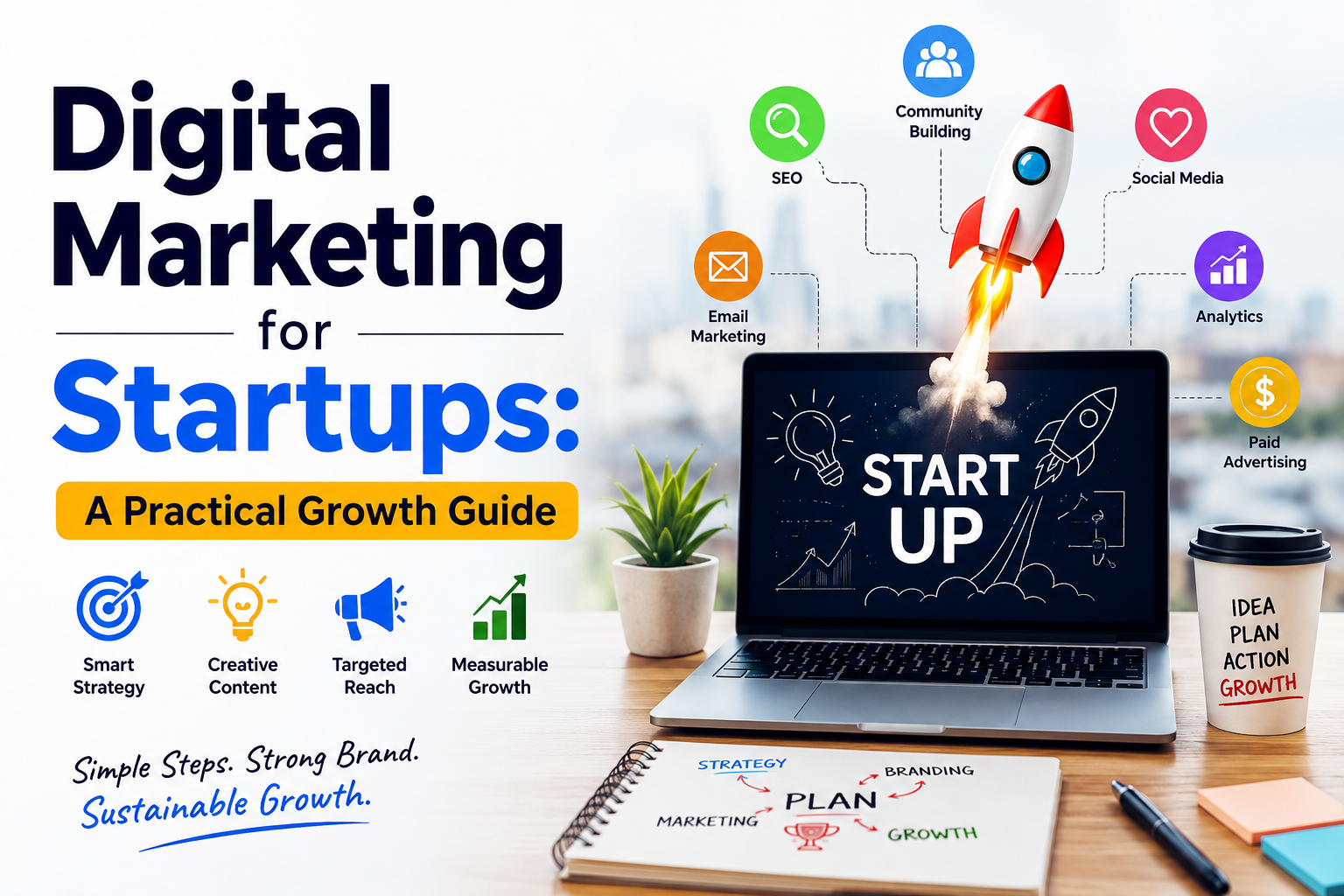
Digital Marketing for Startups: A Practical Growth Guide
Build visibility, attract the right audience, and turn early-stage business ideas into sustainable digital growth.
Starting a business is exciting, but getting noticed in a crowded market can be challenging. A startup may have a strong product, a fresh idea, or an innovative service, but without the right online visibility, reaching potential customers can take time.
This is where digital marketing for startups becomes important. It helps new businesses introduce their brand, understand their audience, generate leads, build trust, and compete with established companies without depending only on traditional marketing.
For startups, digital marketing is not simply about posting on social media or running advertisements. It is about creating a practical strategy where SEO, content, social media, paid campaigns, websites, and analytics work together.
What Is Digital Marketing for Startups?
Digital marketing for startups means using online platforms and marketing channels to promote a new business, product, or service.
The objective is to connect with the right audience at the right stage of their buying journey.
A startup can use digital marketing to:
- Build brand awareness
- Generate qualified leads
- Increase website traffic
- Improve search visibility
- Create customer engagement
- Promote products or services
- Build credibility
- Measure marketing performance
Unlike traditional advertising, digital marketing allows startups to monitor important performance indicators and make changes based on actual results.
Why Do Startups Need Digital Marketing?
Startups usually operate with limited resources. They need marketing activities that can be measured, adjusted, and scaled according to business growth.
A well-planned digital strategy can help startups reach specific customer groups instead of promoting their business to everyone.
For example, a startup selling business software can target founders, business owners, or specific industries through search campaigns, LinkedIn content, SEO, and educational blogs.
This focused approach can make marketing more relevant and efficient.
Key Digital Marketing Services for Startups
A startup does not necessarily need to use every digital marketing channel from day one. The right combination depends on its industry, audience, budget, business model, and growth stage.
1. Search Engine Optimization
SEO helps a startup improve its organic visibility on search engines.
For example, when potential customers search for solutions related to a startup's product or service, a properly optimized website has a better opportunity to appear in relevant search results.
SEO activities may include:
- Keyword research
- On-page optimization
- Technical SEO
- Content development
- Internal linking
- Local SEO
- Off-page SEO
- Performance monitoring
For startups, SEO can become a long-term source of relevant website traffic.
2. Content Marketing
Content helps startups answer customer questions before asking customers to make a purchase.
Useful content can include blogs, guides, case studies, videos, infographics, FAQs, and social media posts.
The focus should be on solving real customer problems rather than simply promoting the company.
For example, a fintech startup could publish content explaining financial planning, digital payments, or common challenges faced by small businesses.
This approach can help establish expertise and trust.
3. Social Media Marketing
Social media allows startups to communicate directly with their target audience.
Platforms such as Instagram, Facebook, LinkedIn, and YouTube can support different business objectives.
A startup can use social media for:
- Brand storytelling
- Educational content
- Product demonstrations
- Customer engagement
- Community building
- Lead generation
- Campaign promotion
Consistency is important. A startup should have a clear content direction instead of publishing random posts.
4. Performance Marketing
Paid advertising can help startups reach potential customers faster.
Search advertising, social media advertising, display campaigns, and remarketing can be used depending on the business objective.
However, running advertisements without a proper strategy can waste money.
Startups should define the target audience, campaign objective, landing page, conversion action, and key performance indicators before launching campaigns.
5. Website Optimization
A website is often the digital foundation of a startup.
It should clearly explain:
- What the company offers
- Who it serves
- Why the solution matters
- How customers can contact the business
- What action visitors should take next
The website should also be mobile-friendly, easy to navigate, secure, and reasonably fast.
A visually attractive website is useful, but clarity and usability are equally important.
How to Create a Digital Marketing Strategy for a Startup
A successful strategy starts with understanding the business.
Step 1: Define the Target Audience
Identify who is most likely to purchase your product or service.
Consider their needs, problems, location, interests, buying behaviour, and decision-making process.
Step 2: Study Competitors
Analyse competitors to understand what they are doing online.
Look at their websites, content, social media presence, search visibility, advertisements, and customer communication.
The goal is not to copy competitors. It is to identify opportunities where your startup can offer something different or more useful.
Step 3: Set Clear Marketing Goals
Avoid vague goals such as "increase online presence."
Instead, define measurable objectives such as increasing qualified website traffic, generating leads, improving keyword visibility, or increasing enquiries.
Step 4: Select the Right Channels
Not every startup needs to be active on every platform.
A B2B startup may focus more on SEO, LinkedIn, email marketing, and Google Ads, while a consumer-focused brand may benefit from Instagram, YouTube, influencer marketing, and performance campaigns.
Step 5: Create Useful Content
Develop content based on questions customers actually ask.
Use blogs, landing pages, videos, FAQs, comparison pages, and educational resources to cover different stages of the customer journey.
Step 6: Measure and Improve
Digital marketing should be treated as an ongoing process.
Monitor traffic, leads, conversions, engagement, keyword performance, advertising results, and customer behaviour.
Use these insights to improve campaigns instead of relying only on assumptions.
How Can a Digital Marketing Agency Help Startups?
Working with a professional agency can give startups access to different marketing skills under one strategy.
A digital marketing agency for startups may help with SEO, paid campaigns, social media, content marketing, website optimization, analytics, and online reputation.
For startups, the main advantage is coordination.
Instead of managing disconnected marketing activities, a startup can create a unified strategy where each channel supports the overall business objective.
Maverick India can be considered when evaluating digital marketing support for startup-focused growth strategies.
Choosing the Right Digital Marketing Company for a Startup
Choosing among digital marketing companies for startups requires more than comparing service lists.
Startups should evaluate whether an agency understands their business model, audience, competition, and growth objectives.
Before making a decision, consider:
- Relevant industry experience
- SEO and content capabilities
- Paid advertising expertise
- Social media strategy
- Reporting and analytics
- Website optimization knowledge
- Communication process
- Strategic approach
- Ability to scale campaigns
A good agency should be able to explain its strategy in simple language and connect marketing activities with measurable business outcomes.
Common Mistakes Startups Should Avoid
Many startups make the mistake of expecting immediate results from every marketing channel.
SEO usually requires consistent effort. Content takes time to build authority. Paid campaigns need testing and optimization.
Other common mistakes include:
- Targeting everyone
- Ignoring SEO fundamentals
- Publishing low-quality content
- Using social media without a strategy
- Sending traffic to poorly designed landing pages
- Not tracking conversions
- Changing strategies too frequently
- Focusing only on vanity metrics
Patience and continuous improvement are important parts of startup marketing.
Why a Long-Term Digital Strategy Matters
Digital growth rarely happens through one campaign.
A startup may initially focus on awareness, then move towards lead generation and finally concentrate on conversions and customer retention.
This is why digital marketing services for startups should be flexible enough to evolve as the business grows.
The strategy that works during the first six months may not be the same strategy required after the startup has established a customer base.
Regular analysis helps identify what is working and where improvements are needed.
Final Thoughts
Digital marketing for startups provides a structured way for new businesses to build visibility, communicate with customers, generate leads, and develop long-term online presence.
The key is not to use every available digital channel. The focus should be on choosing the right channels, creating useful content, understanding customer intent, measuring results, and improving the strategy over time.
Whether a startup needs SEO, paid advertising, social media, content marketing, or a combination of these services, a clear digital strategy can create a stronger foundation for sustainable growth.