Digital Marketing for Manufacturing Companies: Strategy to Generate B2B Leads
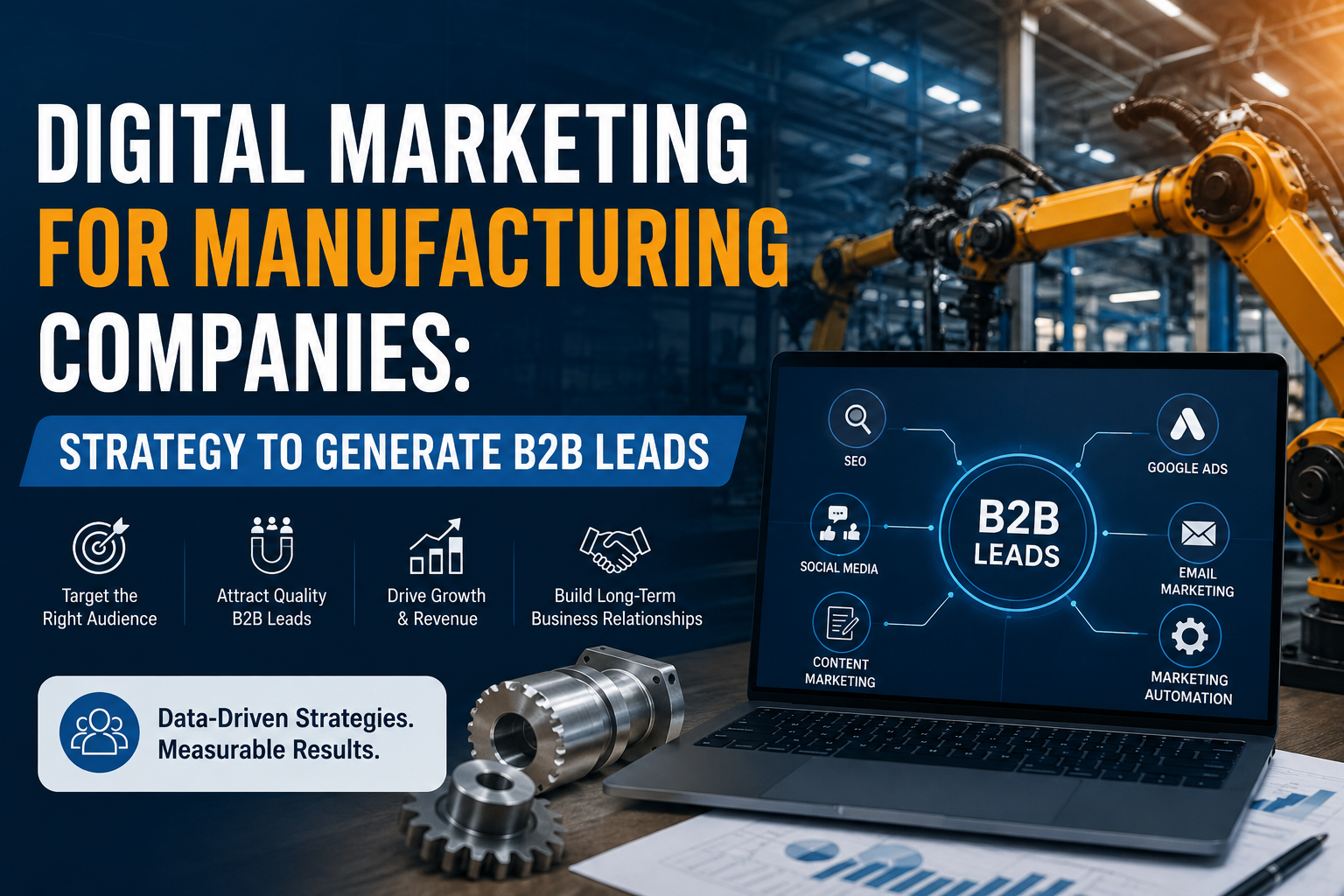
Digital Marketing for Manufacturing Companies: Strategy to Generate B2B Leads
Tagline: Turn your manufacturing expertise into online visibility, qualified enquiries and long-term B2B business growth.
Manufacturing businesses in India have changed a lot in recent years. Earlier, manufacturers mainly depended on distributors, exhibitions, references, trade fairs and direct sales teams to generate new business.
Today, the buyer journey is different.
A procurement manager, business owner, engineer or sourcing professional may first search Google before speaking to a supplier. They compare manufacturers, check product specifications, visit websites, read case studies and look at a company's online presence before sending an enquiry.
This is where digital marketing for manufacturers becomes important.
A strong online strategy helps manufacturing companies reach the right audience, explain their capabilities and generate qualified enquiries instead of depending only on traditional sales channels.
What Is Digital Marketing for Manufacturing Companies?
Digital marketing for manufacturing companies means using online channels to promote manufacturing products, capabilities, services and expertise to potential buyers.
Unlike consumer marketing, manufacturing marketing usually involves a longer B2B buying cycle. A buyer may need technical information, certifications, product specifications, application details, production capacity and commercial information before making a decision.
A successful strategy can include:
- Search Engine Optimization (SEO)
- Google Ads and PPC
- LinkedIn marketing
- Technical content marketing
- Website development and optimization
- Email marketing
- Video marketing
- Online reputation management
- Lead generation and remarketing
- Conversion rate optimization
The objective is not simply to get website traffic. The real objective is to attract relevant visitors and convert them into enquiries, RFQs, meetings and business opportunities.
Why Digital Marketing Is Important for the Manufacturing Industry
The manufacturing buying process is becoming increasingly research-driven. Buyers often investigate suppliers online before contacting the sales team.
For this reason, a manufacturer with a weak online presence can lose potential opportunities even when its products and production capabilities are excellent.
A strong digital marketing strategy for manufacturing industry can help businesses:
- Increase online visibility
- Reach procurement professionals
- Generate B2B enquiries
- Promote new products
- Build brand credibility
- Target specific industries
- Reach international buyers
- Support the sales team
- Reduce dependence on traditional lead sources
The important point is that manufacturing marketing should be designed around the actual buying journey rather than copied from a typical B2C marketing campaign.
How SEO for Manufacturing Companies Works
SEO is one of the most important components of digital marketing in manufacturing industry.
Manufacturers often have highly specific search terms related to their products and capabilities. For example:
- Industrial equipment manufacturer in India
- CNC components manufacturer
- Sheet metal fabrication company
- Automotive parts manufacturer
- Industrial packaging supplier
- Custom machine manufacturer
These searches may have lower volume than consumer keywords, but they can carry much stronger commercial intent.
A good manufacturing SEO agency focuses on these high-intent searches instead of chasing traffic for unrelated keywords.
Product and Service Pages
Every major product or manufacturing capability should have a properly optimized website page.
The page should clearly explain:
- Product specifications
- Materials used
- Available sizes or variants
- Applications
- Industries served
- Manufacturing capabilities
- Quality standards
- Certifications
- Delivery or production information
- Frequently asked questions
- Enquiry options
This gives search engines and potential buyers a clear understanding of what the company actually offers.
Technical Content Builds Trust
Manufacturing buyers usually want more than promotional statements.
They want useful information.
For example, instead of publishing a generic article about industrial components, a manufacturer can publish:
“How to Select the Right Material for Industrial Components?”
Similarly, an engineering company can create guides covering tolerances, applications, maintenance, production processes or material selection.
This type of content demonstrates practical knowledge and can help answer questions that buyers search before contacting suppliers.
Google also recommends creating original, useful content that demonstrates experience and expertise rather than simply rewriting information already available online.
LinkedIn Marketing for Manufacturing Companies
LinkedIn can be particularly useful for B2B manufacturers.
Decision-makers such as procurement managers, plant heads, engineering professionals, business owners and supply-chain professionals actively use professional networks to research companies and industry developments.
A digital marketing agency for manufacturing companies can create a LinkedIn strategy around:
- Product launches
- Factory capabilities
- New machinery
- Manufacturing processes
- Certifications
- Industry insights
- Customer success stories
- Case studies
- Employee expertise
- Exhibition participation
- New partnerships
The content should educate first and sell second.
For example, a post explaining how a particular manufacturing process improves product quality may create more meaningful engagement than a simple “Contact us today” promotional post.
Google Ads and Lead Generation
SEO provides long-term visibility, but manufacturers may also use paid search campaigns to reach buyers who are already searching for a product or supplier.
Google Ads can target high-intent keywords such as:
“industrial equipment manufacturer in Delhi”
or
“custom metal components manufacturer India.”
Landing pages should be created specifically for each campaign.
A landing page should provide the important information quickly and include a simple enquiry form, phone number, WhatsApp option or RFQ button.
The goal is to make it easy for a potential buyer to take the next step.
Content Marketing for the Manufacturing Industry
A strong digital marketing strategy for manufacturing company should include content at different stages of the buyer journey.
Awareness Content
This content answers general industry questions.
Examples:
- What is CNC machining?
- How does industrial automation work?
- What are the benefits of precision manufacturing?
Consideration Content
This helps buyers compare solutions.
Examples:
- CNC machining vs conventional machining
- Different materials used in industrial components
- How to select an industrial equipment supplier
Decision-Stage Content
This content helps a buyer evaluate a specific manufacturer.
Examples:
- Manufacturing capabilities
- Product specifications
- Certifications
- Case studies
- Client industries
- Quality-control processes
- Production capacity
This approach helps the website become a useful resource instead of simply functioning as an online brochure.
Website Optimization Is Essential
Even an effective digital agency manufacturing strategy can struggle if the website is difficult to use.
Manufacturing websites should be:
- Mobile-friendly
- Fast-loading
- Easy to navigate
- Secure
- Technically optimized
- Clear about products and services
- Easy to contact
Important pages should not be hidden behind complicated navigation.
The website should make it immediately clear:
- What do you manufacture?
- Who do you manufacture for?
- Where do you operate?
- What makes your capabilities relevant?
- How can a buyer request a quotation?
Clear answers improve both user experience and search visibility.
A Complete Digital Marketing Strategy for Manufacturing Industry
A practical digital marketing strategy for manufacturing industry can be divided into five stages.
1. Research
Start with competitor research, keyword research, customer research and website analysis.
Understand what buyers are searching for and how competitors are positioning themselves.
2. Website Optimization
Improve product pages, service pages, technical information, navigation, forms and conversion elements.
3. SEO and Content
Build content around products, applications, industries, technical questions and high-intent searches.
4. Paid and Social Marketing
Use Google Ads, LinkedIn and remarketing campaigns where they make commercial sense.
5. Measurement
Track meaningful business metrics such as:
- Qualified leads
- RFQs
- Cost per lead
- Organic enquiries
- Conversion rate
- Keyword visibility
- Landing-page performance
- Sales pipeline contribution
Traffic alone does not tell the complete story.
Why Choose a Manufacturing Digital Marketing Agency?
Manufacturing businesses have unique marketing requirements.
A general marketing approach may not fully understand technical products, industrial buying cycles or B2B procurement behaviour.
A manufacturing digital marketing agency can build campaigns around the company's products, capabilities, industries and target buyers.
The right digital marketing agency for manufacturers should understand both marketing and the manufacturing business.
At Maverick India, businesses can explore a structured digital approach through SEO, website development, content marketing, social media, performance marketing and online brand building.
How AEO and GEO Can Support Manufacturing Visibility
Search is no longer limited to traditional blue-link results.
People are increasingly asking direct questions through search engines and AI-powered platforms.
This makes Answer Engine Optimization (AEO) and Generative Engine Optimization (GEO) increasingly relevant.
For manufacturing brands, this means creating clear answers to questions such as:
- What does a particular manufacturer produce?
- Which industries does the company serve?
- What materials are available?
- What certifications does the company have?
- What is the manufacturing process?
- How can buyers request an RFQ?
Clear headings, concise answers, structured information, original insights and trustworthy company information can make content easier for both people and modern search systems to understand.
Google's current guidance also emphasizes that strong fundamentals—technical SEO, unique and valuable content, and people-first information—remain important for visibility in generative AI search experiences.
Final Thoughts
Digital marketing for manufacturing industry is no longer just about having a website or posting occasionally on social media.
It is about creating a complete digital journey where the right buyer can discover your company, understand your capabilities, evaluate your expertise and contact your sales team.
From SEO for manufacturing companies and technical content to Google Ads, LinkedIn marketing and conversion-focused websites, every activity should support a clear business objective.
For Indian manufacturers looking to expand their domestic or international customer base, a well-planned digital strategy can become an important part of long-term business growth.
The key is simple: understand your buyer, create useful information, build trust and make it easy for qualified prospects to contact you.